TMJ Guide
ADHD Morning Routine: How to Start Your Day Without Chaos
ADHD morning routine guide: science-backed strategies to start your day without overwhelm. Build a system that works with your brain, not against it. 2026.
By Dr. Marcus Webb, Clinical Psychologist & ADHD Coach · Published 2026-03-10 · Updated 2026-03-25
This article is for informational purposes only. Consult a healthcare professional for personalised advice.
ADHD Morning Routine: How to Start Your Day Without Chaos
By Dr. Marcus Webb, Clinical Psychologist & ADHD Coach | Last updated March 2026
An effective ADHD morning routine is externally scaffolded, not willpower-dependent. The standard advice — "just be more organised" or "set your alarm earlier" — fails for ADHD because it demands the exact executive function that ADHD impairs. This guide provides neuroscience-backed strategies that work with your brain's wiring, covering the specific techniques that reduce ADHD morning chaos without requiring superhuman effort.
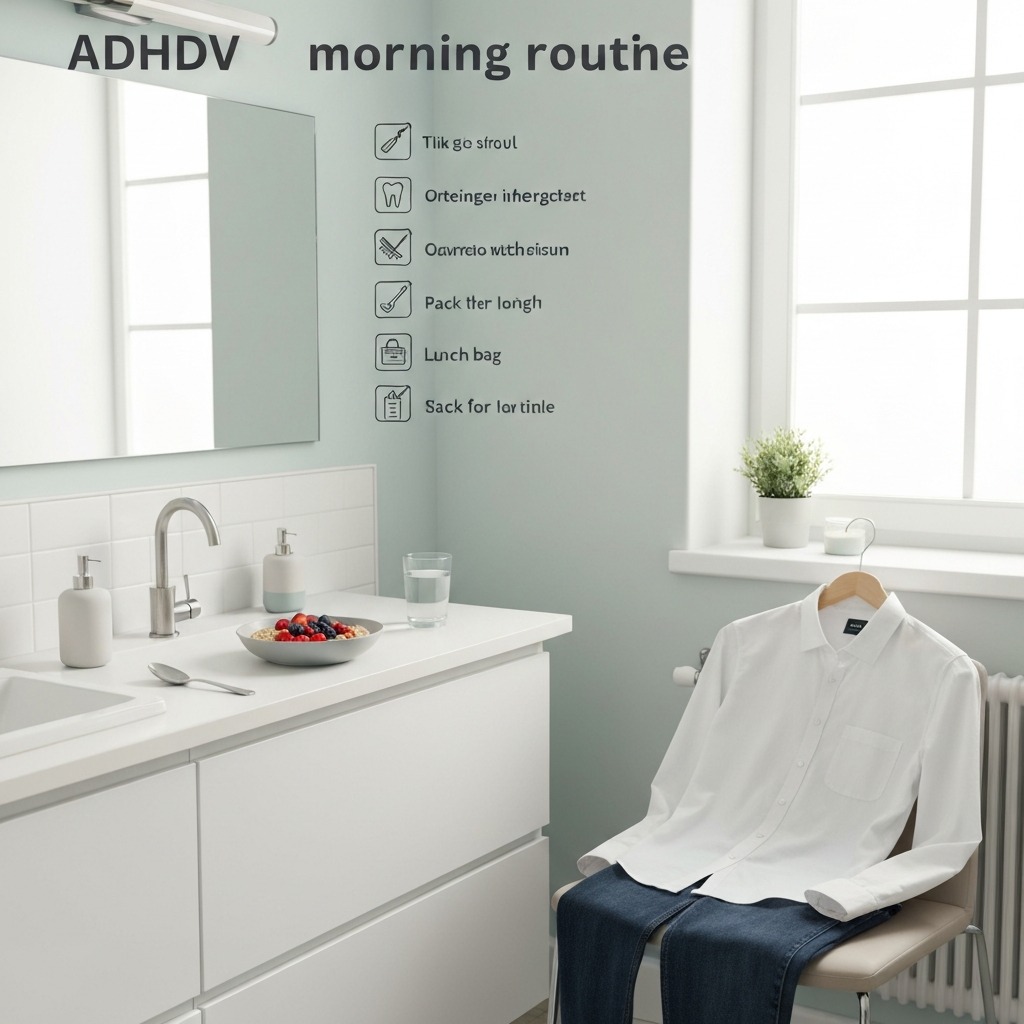
Table of Contents
- Why ADHD Makes Mornings Hard
- The ADHD Morning Architecture
- The Night-Before Protocol
- The Morning Sequence
- ADHD Morning Tools That Actually Help
- Products That Support ADHD Mornings
- Frequently Asked Questions
- Sources & Methodology
Why ADHD Makes Mornings Hard
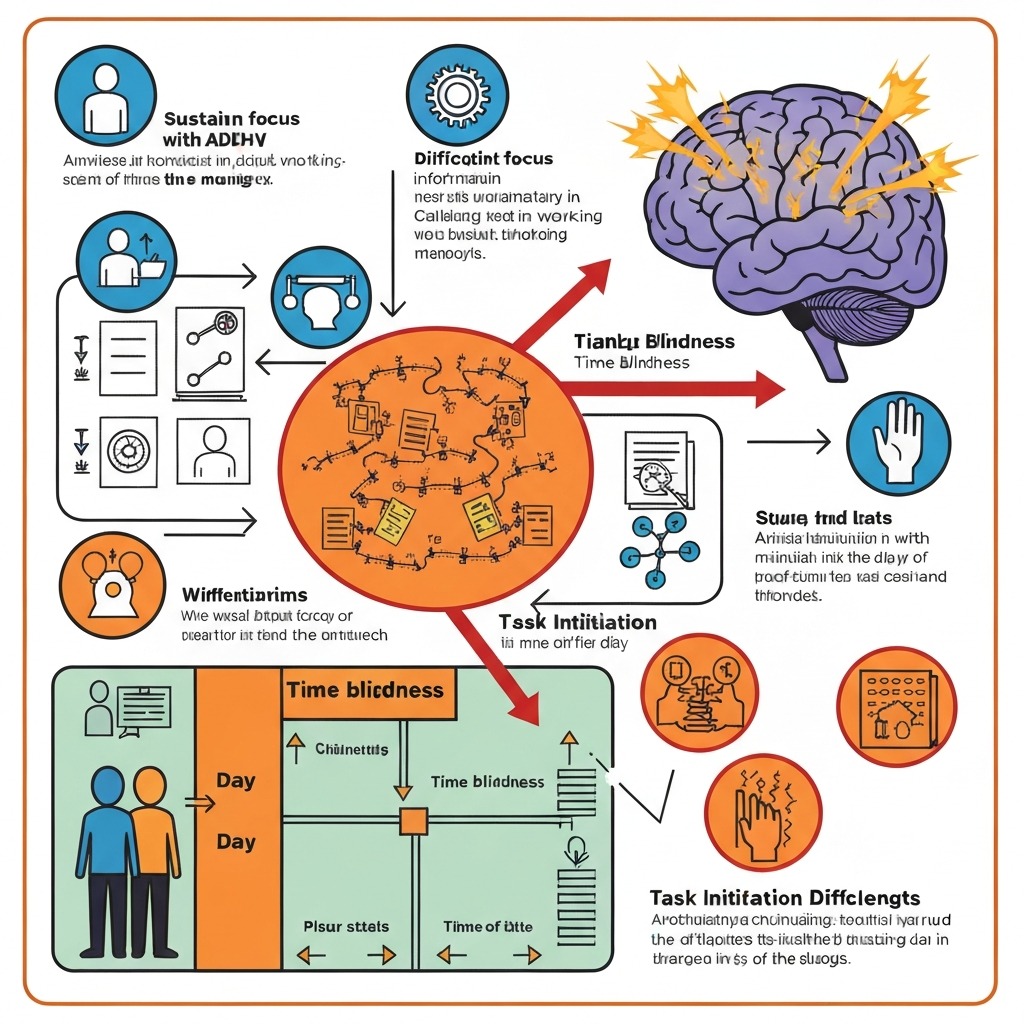
Mornings require exactly the executive functions that ADHD impairs:
Working Memory Deficits
You need to remember multiple steps in sequence: wake up, bathroom, shower, dress, breakfast, medication, pack bag, leave. Each step must be held in working memory while completing the previous one. ADHD impairs this working memory store — steps get forgotten, sequences get disrupted, you end up leaving the house without your keys for the third time this week.
Time Blindness
ADHD is associated with impaired time perception — the inability to accurately sense how much time has passed. Thirty minutes can feel like five minutes in the shower. This is not laziness; it is a neurological impairment in temporal perception that makes time management without external cues nearly impossible.
Task Initiation Difficulty
The hardest part of any ADHD morning is not the tasks themselves — it's starting them. Getting out of bed when the alarm goes off requires the same initiation circuitry that ADHD impairs. The result is lying in bed fully intending to get up for 20 minutes, losing what felt like seconds.
Circadian Rhythm Delay
Research consistently shows that people with ADHD have a natural circadian rhythm that runs 1–2 hours later than neurotypical individuals. If your body wants to wake at 8am but your job requires 7am, you are fighting biology every morning before you've even started the executive function battle.
The ADHD Morning Architecture
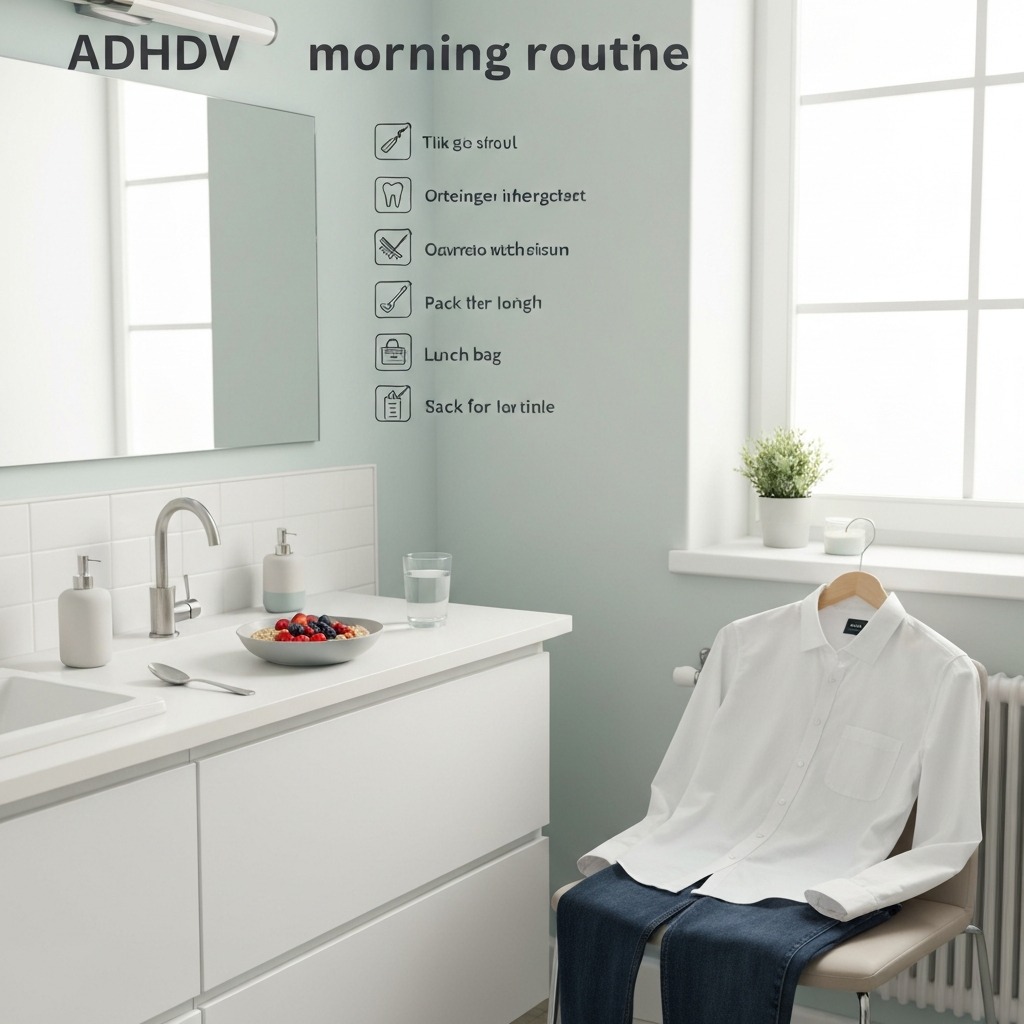
The key insight: ADHD morning routines should require the minimum number of decisions.
Every decision is a tax on working memory and executive function. Standard morning advice adds decisions ("what should I have for breakfast?", "what should I wear?"). Effective ADHD morning routines eliminate decisions by pre-making them the night before.
The Core Architecture
Phase 1 — Activation (5 minutes): Wake and activate alertness before doing anything else Phase 2 — Autopilot tasks (15 minutes): Hygiene and getting dressed (minimal decision tasks) Phase 3 — Fuel (10 minutes): Pre-prepared breakfast Phase 4 — Departure prep (10 minutes): Pre-prepared bag and items, final check Total: 40 minutes
The 40-minute target is deliberately short. ADHD mornings stretch to 90+ minutes through getting absorbed in low-priority activities, time blindness, and hyperfocusing on irrelevant things. A 40-minute architecture with a departure alarm prevents this.
The Night-Before Protocol
The most important ADHD morning hack is not morning at all — it's the evening before. Externalise every decision.
Non-Negotiable Night-Before Tasks
1. Lay out tomorrow's clothes — Every item, including underwear, socks, and shoes. No morning decision about what to wear. If matching colours stresses you, buy 5 identical pairs of socks and solve the problem permanently.
2. Pack your bag — Everything that needs to go with you is in your bag, by the door, tonight. Keys, wallet, phone charger, earbuds, work laptop, lunch. Not almost everything. Everything.
3. Prepare breakfast — Overnight oats, hard-boiled eggs, pre-portioned Greek yogurt, fruit. Whatever it is, it should require zero preparation in the morning. Open container, eat.
4. Set the medication — If you take morning ADHD medication, place it with a glass of water beside your bed, or in a visible location on the way to the bathroom. Morning you should not have to make any effort to find or remember it.
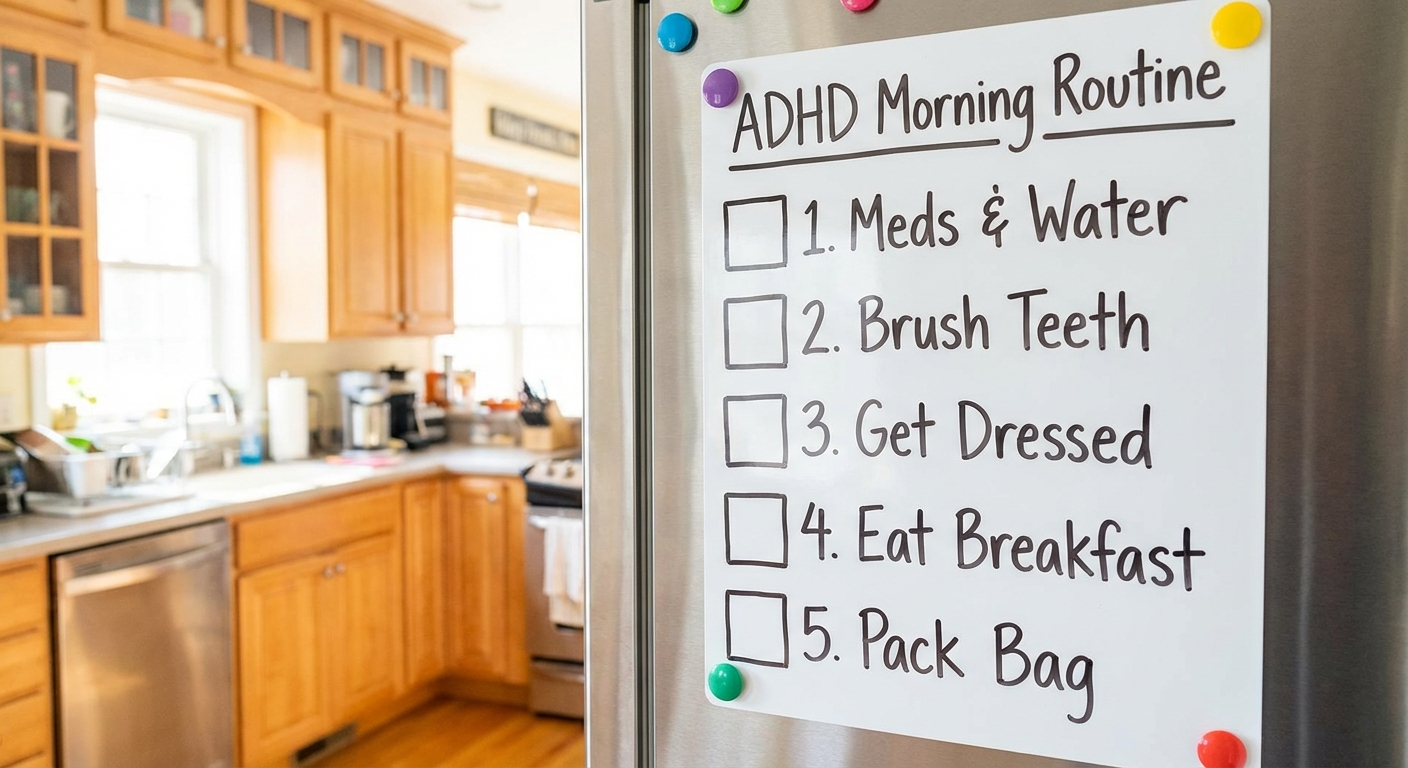
5. Visual checklist up — Your morning checklist (see below) should be physically posted in the bathroom or kitchen where morning-you will see it. Not in an app. On the wall.
The Morning Sequence
Alarm Strategy
No snooze. The snooze button is an ADHD trap. The 9 minutes of fragmented sleep provide no restorative benefit and make getting up harder. More importantly, the decision to snooze is the first executive function failure of the day — it trains the brain to override intentions with immediate-comfort decisions.
Strategies that work better than snooze:
- Place your alarm physically across the room (getting up to turn it off activates the body)
- Use a gradually increasing light alarm (simulates sunrise, reduces the jarring-wake that triggers sleep inertia)
- Use the alarm app "Alarmy" (requires a photo or math puzzle to turn off)
Light exposure immediately: Open curtains or turn on full-spectrum lighting within 2 minutes of waking. Light is the strongest circadian regulator — it suppresses melatonin and advances waking alertness. Even on cloudy days, outdoor light is 10–50x brighter than typical indoor lighting.
The Bathroom Visual Checklist
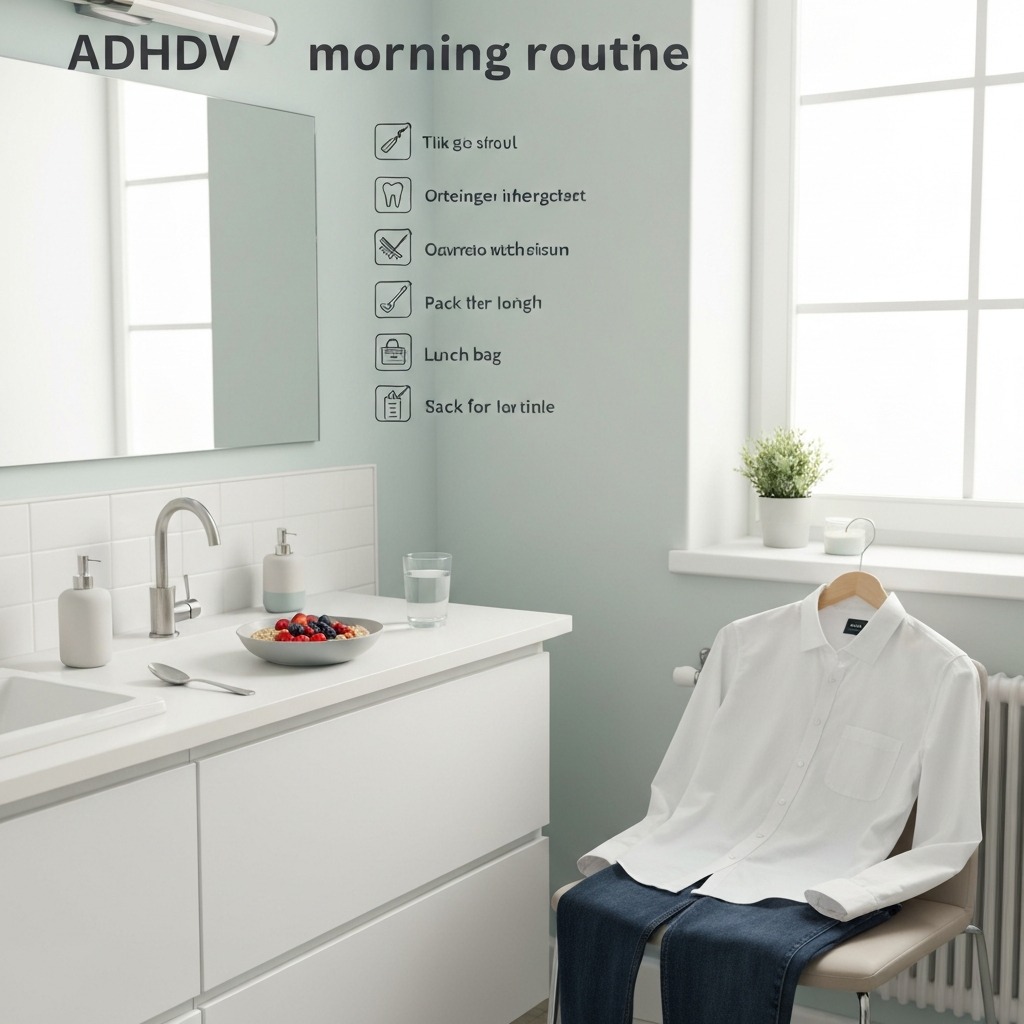
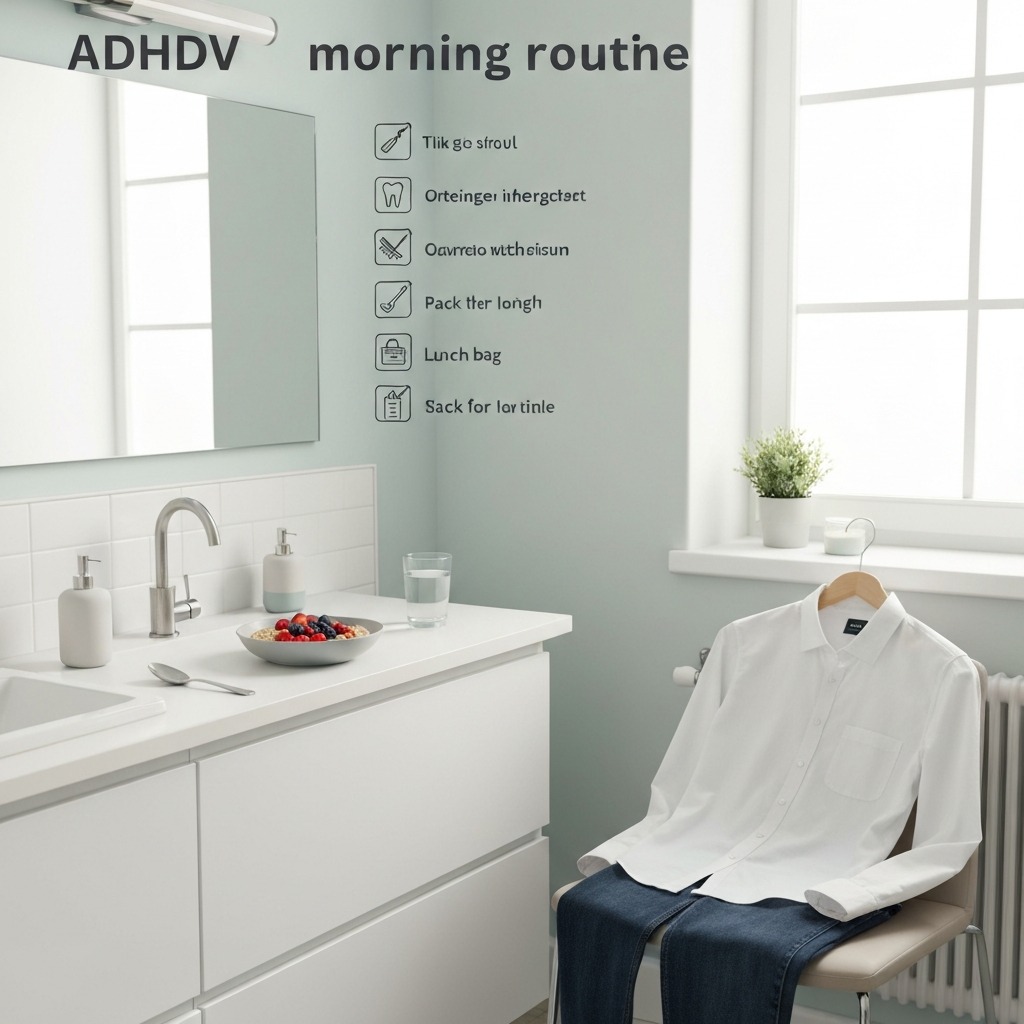
Post a laminated, bulleted checklist on your bathroom mirror:
- ☐ Brush teeth
- ☐ Shower / wash face
- ☐ Deodorant
- ☐ Get dressed
- ☐ Medication
- ☐ Eat breakfast
- ☐ Check bag (packed last night)
- ☐ Keys / phone / wallet check
- ☐ Departure alarm check
This checklist exists because ADHD working memory fails to reliably sequence morning tasks. The visual list replaces working memory with a physical external scaffold.
The Departure Alarm
Set an alarm for departure time. Not "time to start getting ready" — departure time. When this alarm goes off, you leave. This creates the urgency and external time pressure that ADHD brains need for task completion.
Back-calculate: if you need to leave at 8:30am, set your departure alarm for 8:30am. If your morning routine takes 40 minutes, your wake alarm is 8:10am. The math works only if you stick to the 40-minute architecture.
ADHD Morning Tools That Actually Help
Time Visual Timers
The Time Timer (and similar visual countdown devices) shows time passing as a shrinking coloured disc. This makes abstract time perception concrete for ADHD brains. Place one in the bathroom: set it for 10 minutes for the shower phase. Watch the red area shrink. This converts time blindness into visual awareness.
Time Timer PLUS 60 Minute
Best for: Visual time management
Visibility: Excellent, color-coded arc
Check on Amazon →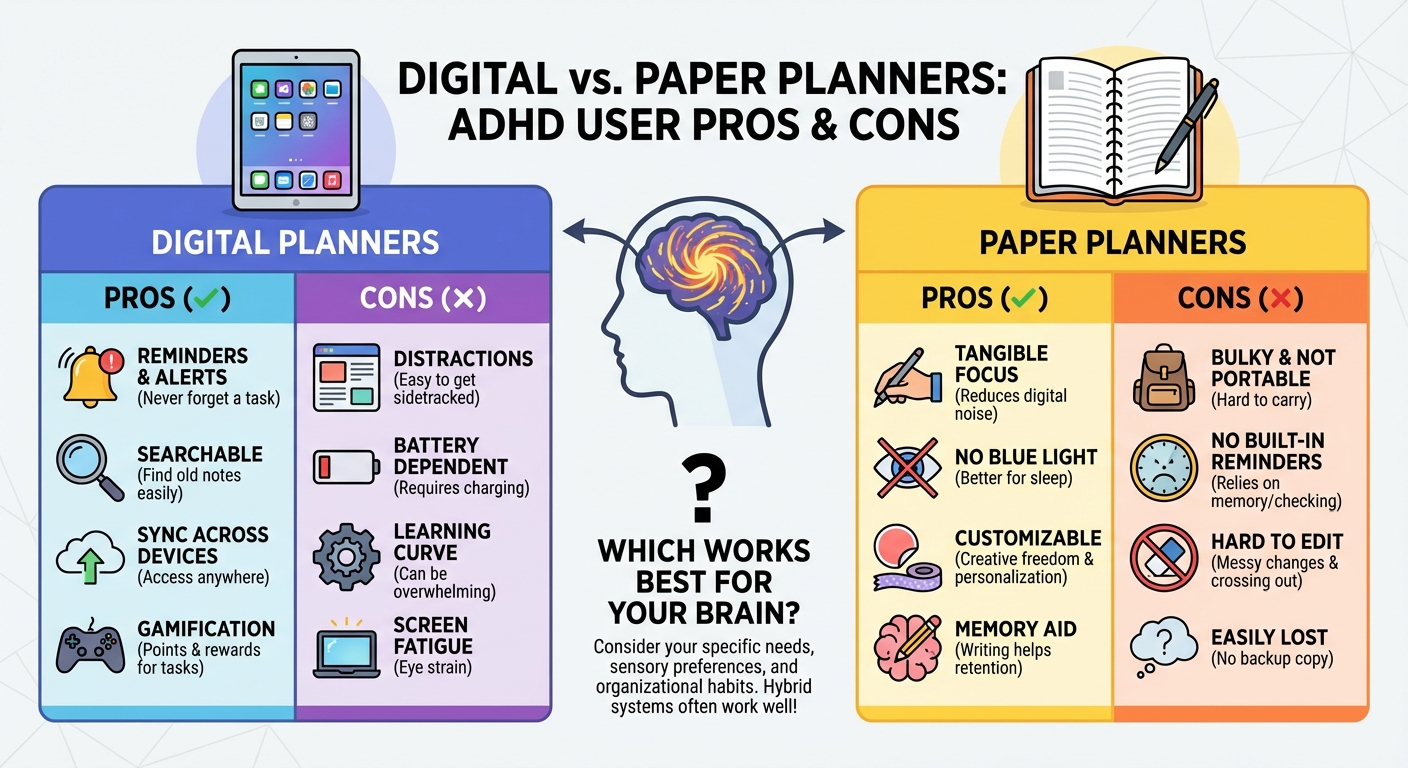
Philips SmartSleep Wake-Up Light
Best for: Gentle morning activation
Light therapy: 200 lux sunrise simulation
Check on Amazon →
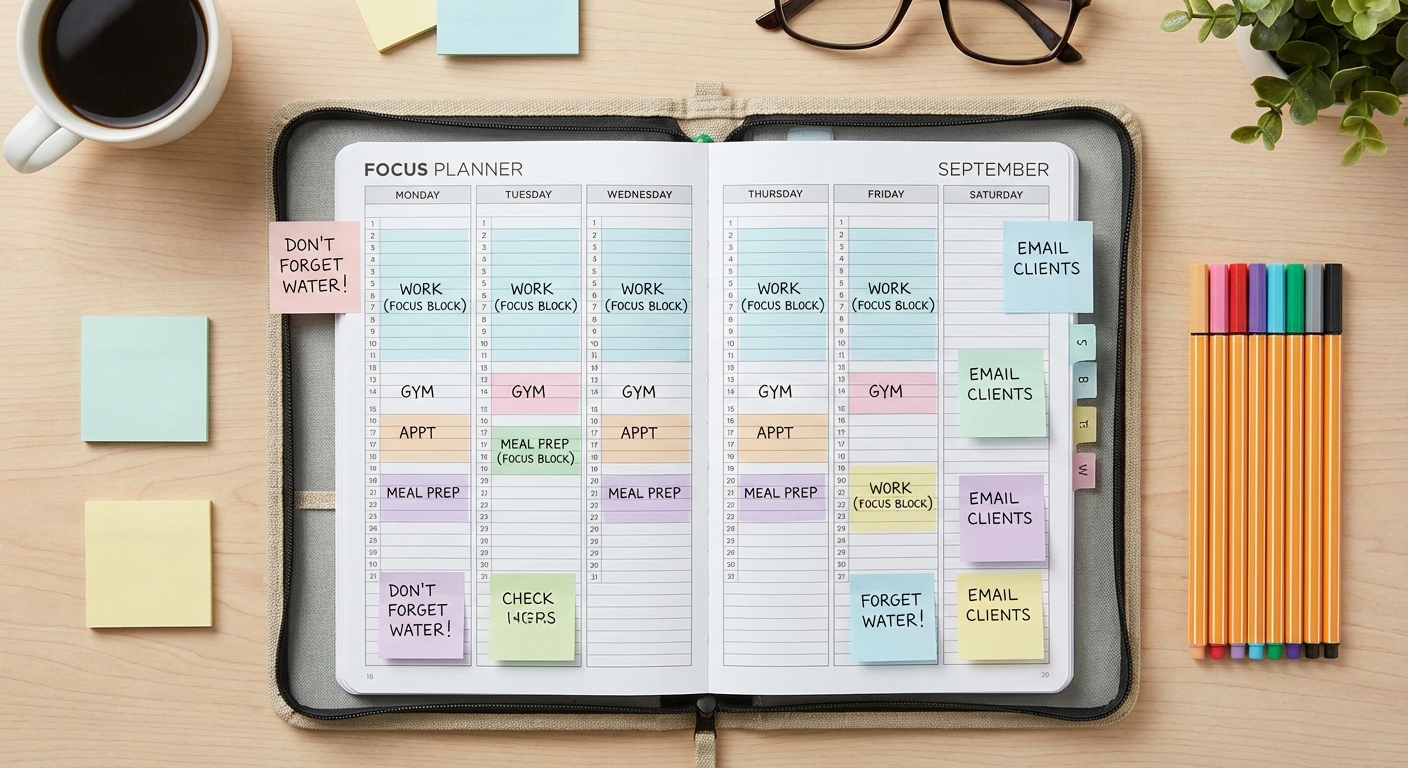
Full Focus Planner
Best for: Morning daily planning
System: Goal-based daily rhythm
Check on Amazon →
Panda Planner Pro
Best for: Combined planning + habit tracking
System: Morning + evening review sections
Check on Amazon →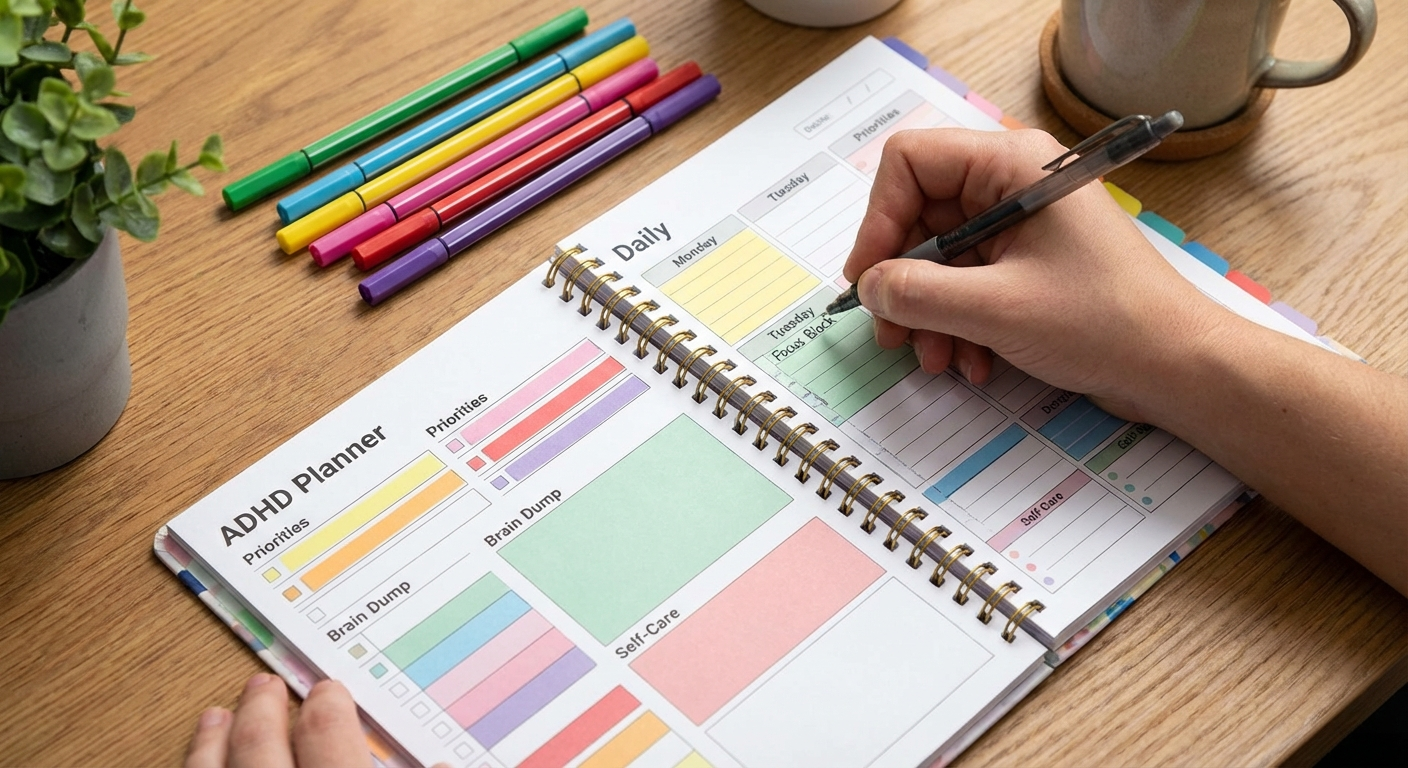
VIZ-PRO Dry Erase Board (Small)
Best for: Bathroom morning checklist
Size: 11x14 inches, wall-mountable
Check on Amazon →For building the morning routine habit consistently over time, habit tracking for ADHD provides external accountability systems that work with ADHD motivation patterns.
<video autoPlay muted loop playsInline poster="/images/articles/adhd-morning-routine-thumb.jpg" style={{width:"100%",borderRadius:"8px",margin:"1.5rem 0"}}>
Frequently Asked Questions
What makes morning routines hard for people with ADHD? Mornings require working memory, time perception, and task initiation — exactly the functions ADHD impairs. It is neurological, not laziness.
What is a good morning routine for ADHD? An externally scaffolded routine: visual checklist posted in the bathroom, fixed wake time, no snooze, immediate light exposure, everything prepared the night before.
How do I stop being late in the morning with ADHD? Set a departure alarm (not just a wake alarm), prepare everything the night before, over-estimate task duration by 50%, and use visible countdown timers.
What should I eat for breakfast with ADHD? High-protein breakfasts (20–30g protein) sustain neurotransmitter levels. Prepare it the night before to remove morning decisions.
Sources & Methodology
- Barkley RA (2012). Executive Functions: What They Are, How They Work, and Why They Evolved. Guilford Press.
- Brown TE (2013). A New Understanding of ADHD in Children and Adults. Routledge.
- Dodson WW (2016). Motivating the unmotivated: interest-based approach to ADHD. ADDitude Magazine.
- Ramsay JR, Rostain AL (2008). Cognitive-Behavioral Therapy for Adult ADHD. Routledge.
- Bijlenga D et al. (2019). Atypical temporal patterns of sleep and activity in ADHD. Journal of Sleep Research, 28(3).
- Cortese S et al. (2015). Sleep in children with attention-deficit/hyperactivity disorder. Journal of Sleep Research, 24(1).
Dr. Marcus Webb is a Clinical Psychologist and certified ADHD coach with 15 years of practice specialising in adult ADHD. He holds a PhD in Neuropsychology from the University of Melbourne.
Common ADHD Morning Fails and How to Fix Them
Fail 1: Phone in the Bedroom
Checking your phone immediately after waking is one of the most destructive ADHD morning patterns. Notifications trigger dopamine responses that hijack attention, creating a 20–45 minute scroll hole before you've even gotten out of bed.
Fix: Charge your phone outside the bedroom. Use a separate alarm clock (the Philips SmartSleep double as a great option). The first 30 minutes of your morning is for routine only — no phone.
Fail 2: "Just Five More Minutes" Negotiation
The ADHD brain is exceptionally good at negotiating with itself in the morning. "Five more minutes won't matter. I'll make up the time. I can skip breakfast." This negotiation is always a lie.
Fix: Commit in advance. Write down your wake time the night before. Make it a non-negotiable agreement with yourself. Some ADHD adults benefit from an accountability partner (send a photo of yourself awake and dressed by X time to a friend or coach).
Fail 3: "I'll Remember" Trap
Not writing things down because you're sure you'll remember. You won't. ADHD working memory is unreliable, especially in the morning when prefrontal cortex function is at its lowest.
Fix: Everything is written. The checklist is the authority. If it's not on the checklist, it doesn't get done.
Fail 4: Morning as Planning Time
Using the morning to plan the day is a trap. Planning requires executive function you do not have in the morning. Keep planning as a fixed, short exercise (5 minutes maximum) and use a template so it requires minimal creative thought.
Fix: Three-item daily list. Every evening, write the three most important things for tomorrow. In the morning, just execute — no new planning.
ADHD Morning Routine for Different Life Stages
For Kids with ADHD
Children with ADHD need even more external scaffolding than adults. The visual checklist should use pictures, not words, for young children. Reward systems (sticker chart for completing the morning routine) provide the immediate reinforcement that motivates ADHD brains.
Key difference: Add 15–20 minutes to any estimated routine time for children with ADHD. Parent supervision of each checklist step (rather than expecting independent execution) is often necessary until the routine is firmly established.
For College Students with ADHD
College morning routines break down because there is no external enforcer (parent, job start time). With variable schedules and self-imposed wake times:
- Keep a consistent wake time even on days with late classes — variable wake times worsen ADHD circadian disruption
- Use accountability apps (Forest, Focusmate) that make visible commitment to routines
- Make the first task of the day as easy as possible — coffee, quick walk, or gym — to activate forward momentum
For Parents with ADHD Managing Children with ADHD
This is the hardest scenario. Two or more people with working memory and task initiation difficulties all trying to leave the house simultaneously.
Strategy: Separate routines. Parent's routine runs 20 minutes before children's routine starts. Parent needs to be fully ready before managing children's routine. Having parent in reactive chaos state while trying to manage children's morning is a disaster formula.
The Science Behind Effective ADHD Routines
What makes ADHD morning interventions effective? The research points to three mechanisms:
External Regulation Replaces Internal Regulation
ADHD's core deficit is in self-regulation — the internal system that monitors and controls behaviour. Effective ADHD strategies externalise regulation: the checklist does what working memory cannot, the timer does what time perception cannot, the departure alarm does what impulse control cannot.
This is not a workaround. It is the correct treatment model for executive function deficits.
Habit Formation Reduces Cognitive Load
When behaviours become habits (automated through repetition), they require minimal executive function to execute. A morning routine that has been repeated 200+ times generates automatic action sequences that bypass the executive function bottleneck.
This is why ADHD morning routines need consistency above all else. The first 4–6 weeks are the hardest. After 8–12 weeks of consistent repetition, the cognitive load of the routine decreases significantly.
Environmental Design Beats Willpower
The physical environment in which you perform your morning routine either supports or sabotages the routine. Clothes laid out the night before make getting dressed automatic. Phone outside the bedroom makes avoiding distraction automatic. The key insight: design the environment so the right behaviour is the easiest behaviour.
This is applied behavioural science — make the default behaviour the desired behaviour, and ADHD resistance decreases dramatically.
What to Do When Your ADHD Morning Routine Breaks Down
Even well-designed routines break down periodically. ADHD makes routines more fragile, not less — a disruption (travel, illness, late night) can collapse a routine that took weeks to build.
The Minimum Viable Routine
Define a 10-minute minimum viable routine: just the non-negotiables (medication, basic hygiene, something to eat). When you have a bad night, or life disrupts the normal schedule, execute the minimum viable routine rather than abandoning all structure.
Routine Recovery Protocol
When a routine has broken down for 3+ days:
- Reset to week 1 — don't try to jump back to full routine
- Run the minimum viable routine for 3 days to re-establish the habit anchor
- Add one element per day until back to full routine
Perfectionistic thinking (all-or-nothing) kills ADHD routines. A partial routine is infinitely better than no routine.
For related strategies, see our guides on time blocking for ADHD, ADHD and procrastination, and best ADHD planners for adults.
Walking Pad vs Treadmill
30-second comparison