ADHD and Procrastination: Why It Happens and How to Fix It

By Dr. Marcus Webb, Clinical Psychologist & ADHD Coach | Last updated: March 21, 2026
This article is for informational purposes only and does not constitute medical advice.
ADHD procrastination is not laziness. It is a neurological failure of task initiation caused by dopamine dysregulation in the prefrontal cortex. People with ADHD often desperately want to start tasks and cannot. Understanding why this happens is the foundation for fixing it — because strategies designed for neurotypical procrastination fail spectacularly for ADHD brains. This guide explains the neuroscience and provides 7 evidence-based strategies that work.

Table of Contents
- The Neuroscience: Why ADHD Procrastination Is Different
- Interest-Based Motivation: The ADHD Activation System
- 7 Evidence-Based Strategies to Beat ADHD Procrastination
- What Doesn't Work for ADHD Procrastination
- ADHD Procrastination at Work vs Personal Tasks
- Tools and Systems That Help
- Frequently Asked Questions
- Sources & Methodology
The Neuroscience: Why ADHD Procrastination Is Different
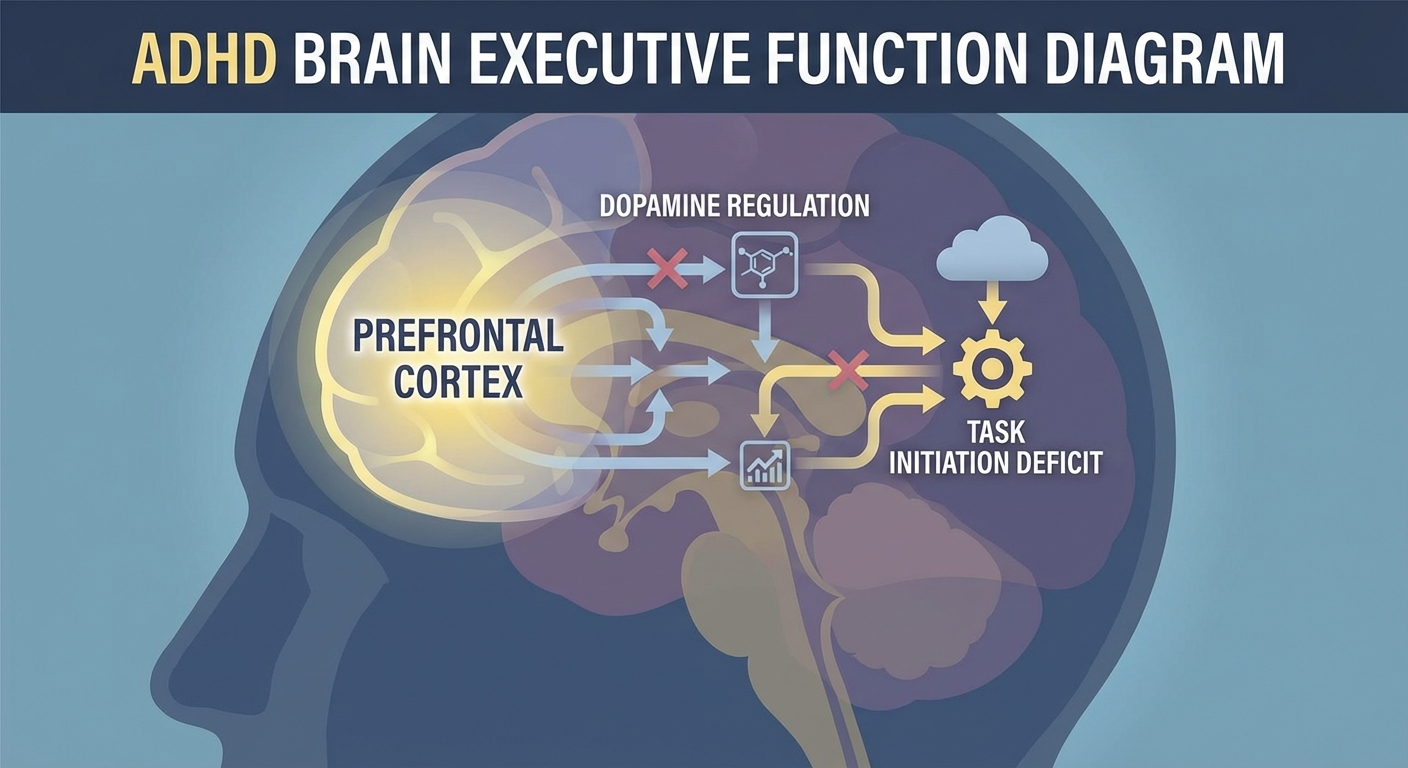
The Dopamine Problem
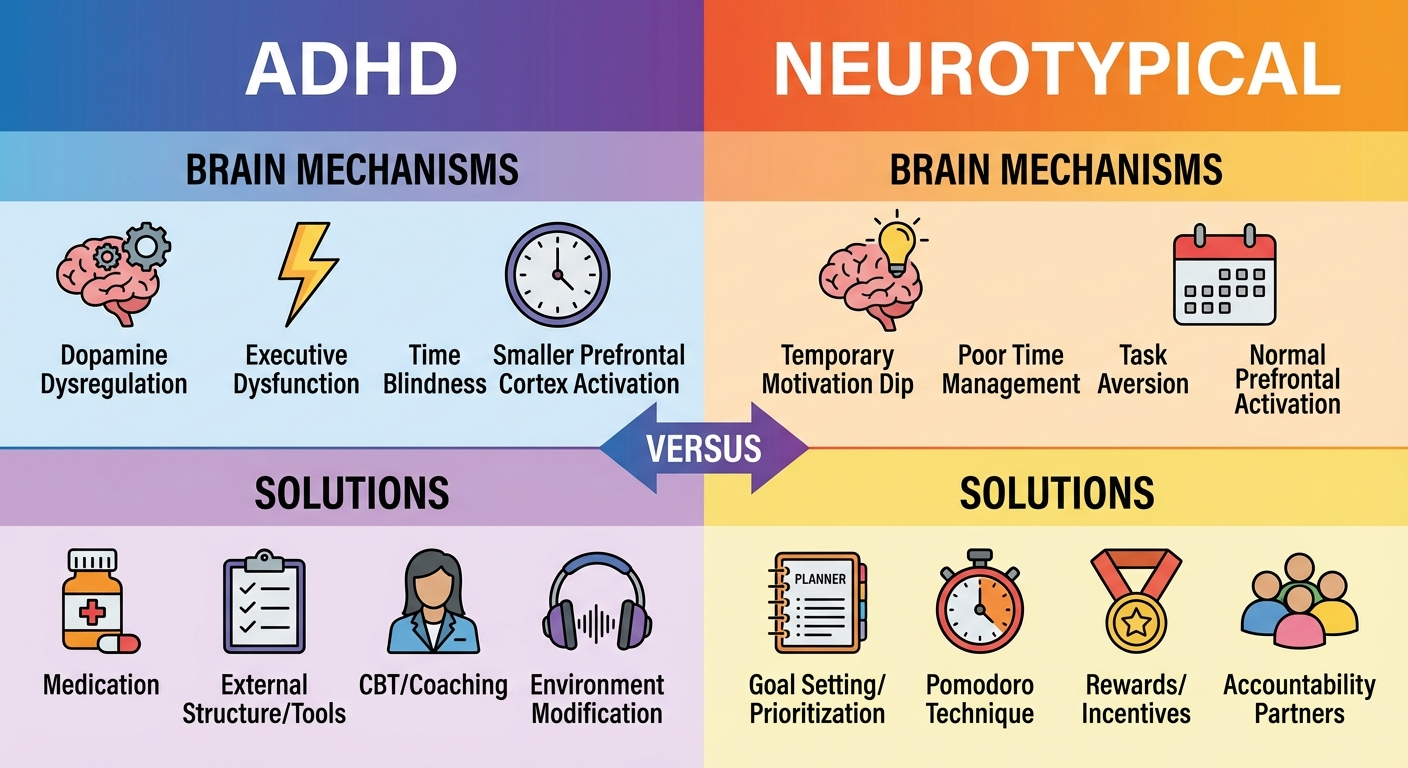
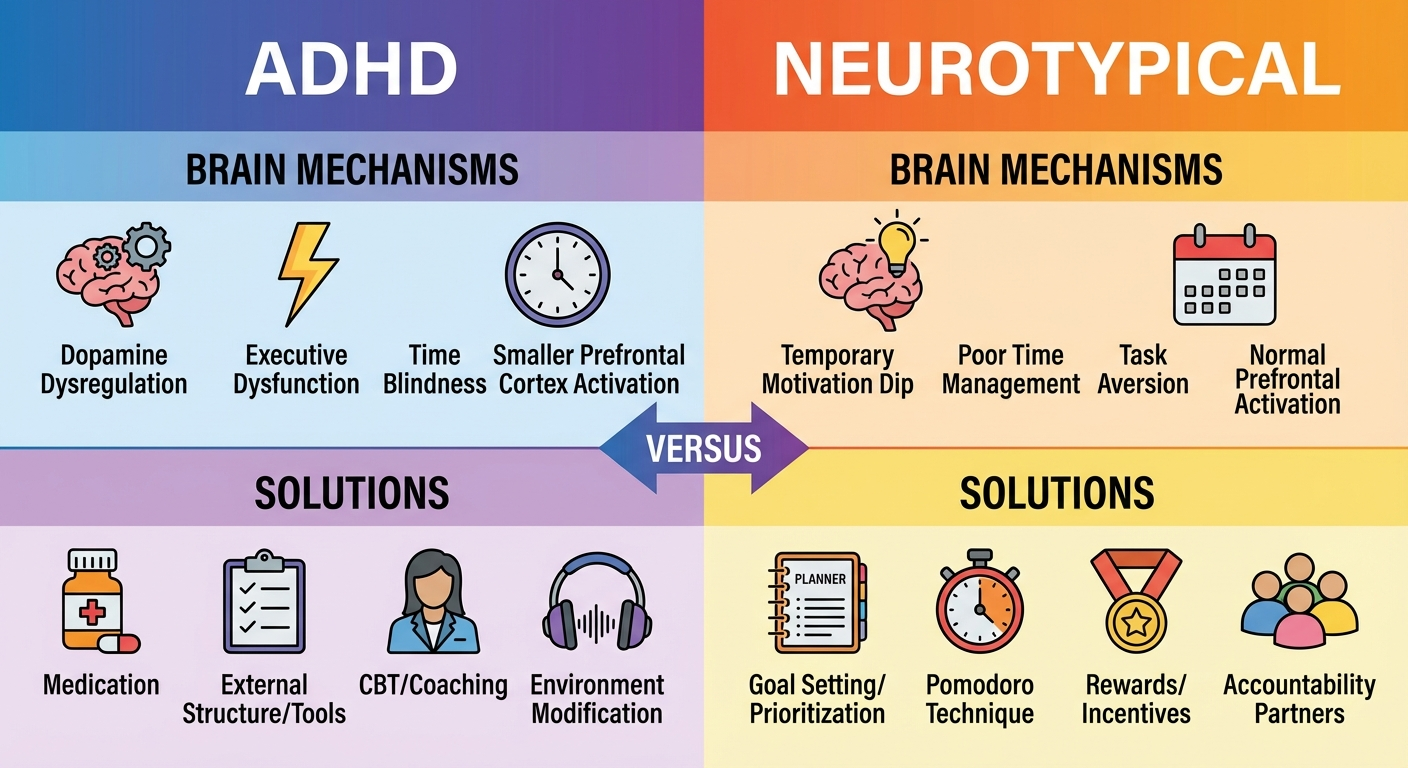
Procrastination in neurotypical individuals is primarily a motivation and emotion regulation problem — choosing short-term comfort over long-term benefit. The cure is "push through it" or "just start."
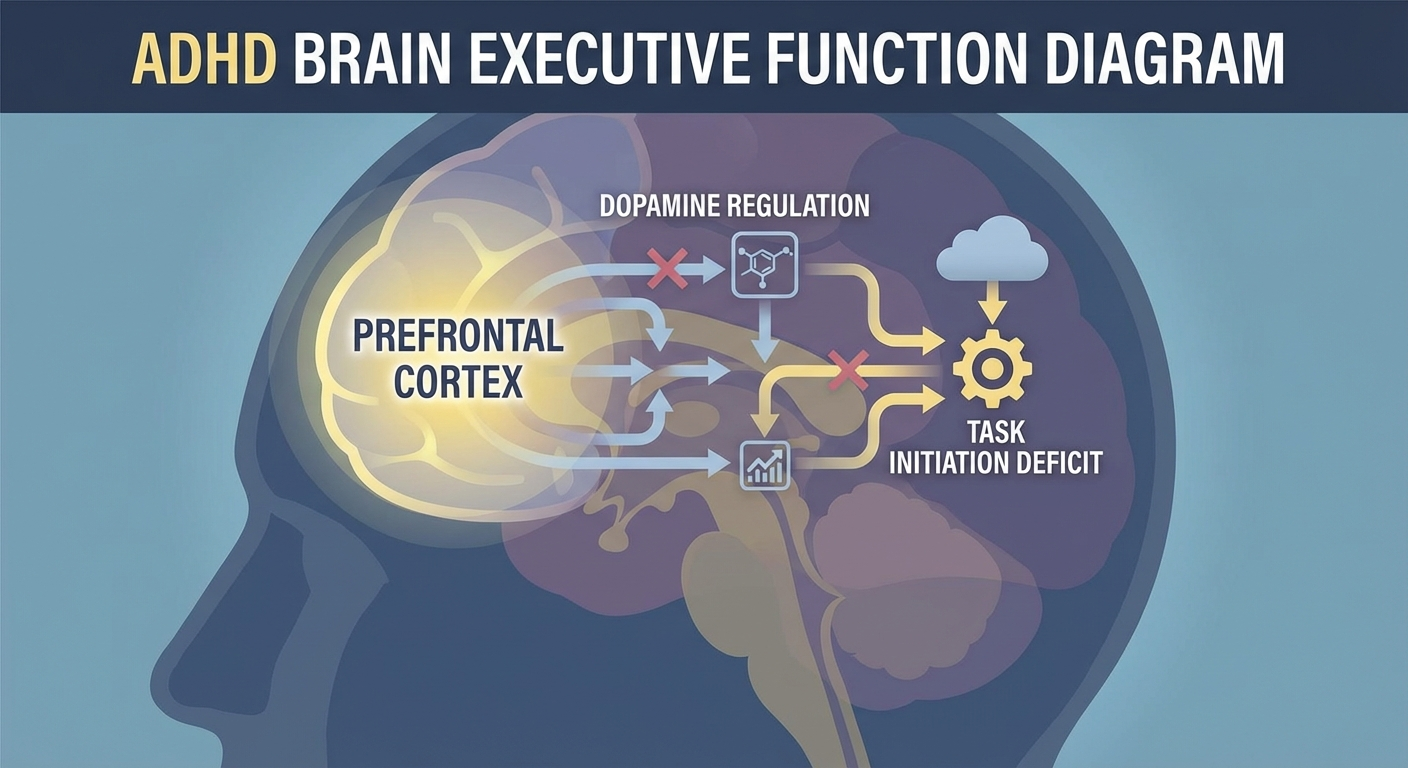
ADHD procrastination operates differently at the neurological level. The ADHD brain has impaired dopamine transmission in the prefrontal cortex — the brain region responsible for executive function including:
- Task initiation: Starting a task when cued by intention rather than immediate reward
- Working memory: Holding the task in mind while doing it
- Emotional regulation: Managing the discomfort of boring or aversive tasks
- Self-monitoring: Tracking progress and staying on target
When dopamine regulation is impaired, the signal that usually bridges "I need to do this" to "I am now doing this" is weak or absent. This is called activation deficit — not difficulty performing tasks, but difficulty initiating them.
The "Knowing-Doing Gap"
The most disorienting feature of ADHD procrastination is the knowing-doing gap: you know exactly what you need to do. You know it's important. You know you should start. You genuinely want to start. And you cannot.
This differs fundamentally from neurotypical procrastination where the barrier is avoiding an unpleasant task. In ADHD, the barrier exists even for tasks you find acceptable or even interesting. The initiation mechanism is broken, not the motivation.
Executive Function vs Willpower
Standard procrastination advice assumes intact executive function and recommends willpower-based solutions: "just start," "set a goal," "think about the consequences." These solutions fail for ADHD because:
- Just start: Requires the same initiation circuitry that isn't working
- Set a goal: Requires sustained working memory and prospective memory function
- Think about consequences: Requires delay discounting ability — valuing future outcomes over immediate states — which is specifically impaired in ADHD
Effective ADHD procrastination strategies bypass the broken internal regulation system by creating external structure that compensates for the missing internal regulation.
Interest-Based Motivation: The ADHD Activation System
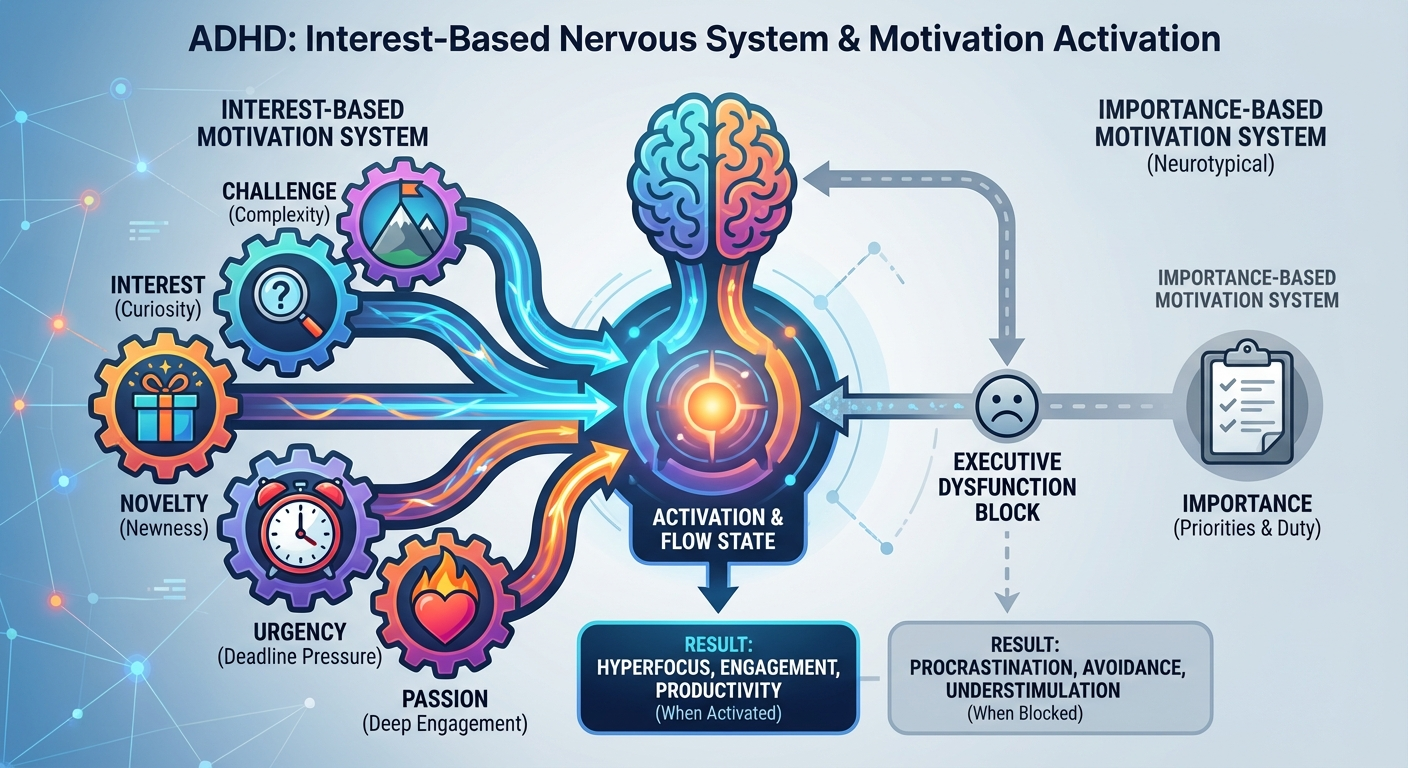
Dr. William Dodson, a leading ADHD researcher, describes the ADHD motivational system as interest-based rather than importance-based. The ADHD brain activates for tasks based on:
- Interest: "This is genuinely engaging to me"
- Challenge: "This is difficult enough to feel stimulating"
- Novelty: "This is new or different"
- Urgency: "This needs to happen NOW"
- Passion: "This matters deeply to me"
Important or obligation-based motivation ("this needs to be done," "this is my job," "someone is counting on me") does not activate the ADHD brain unless it also meets one of the above criteria.
This explains the apparent paradox of ADHD adults who can hyperfocus for 12 hours on a video game but cannot start a 10-minute work task: the game is interesting, challenging, novel, and urgent (moment-to-moment feedback). The work task is none of these things.
Designing Tasks to Be Activating
The practical implication: instead of trying to convince yourself that important tasks are important enough to start (they already are; that's not the problem), redesign the task environment to trigger interest, challenge, novelty, or urgency:
| Activation Factor | How to Engineer It |
|---|---|
| Interest | Start with the most interesting part, not the beginning |
| Challenge | Set a difficulty target (complete in X minutes, beat last time) |
| Novelty | Change location, music, tools, or time of day |
| Urgency | Set a visible countdown timer; use real or artificial deadlines |
| Passion | Connect the task to something you care about |
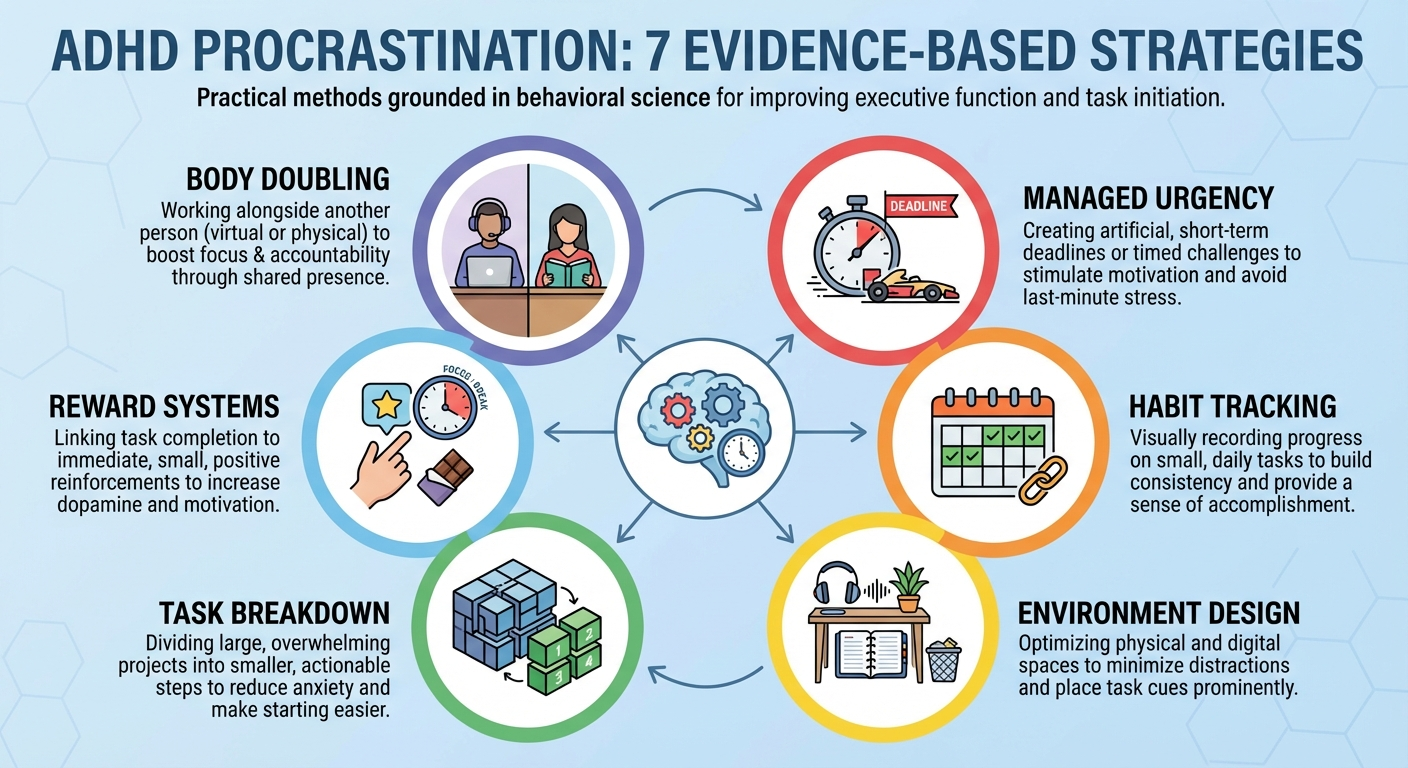
7 Evidence-Based Strategies to Beat ADHD Procrastination
Strategy 1: Body Doubling
Body doubling is the single most consistently effective ADHD productivity strategy. Working in the presence of another person provides external regulation that compensates for impaired internal regulation.
The other person doesn't need to help or even engage — simply being present (even via video call) provides enough external focus anchor to enable initiation. Why it works: the ADHD brain becomes regulated by the social presence, which provides the external monitoring function that internal executive function fails to provide.
How to use it:
- Work alongside a friend, coworker, or family member
- Use virtual body doubling apps (Focusmate, Forest with friends)
- Work in coffee shops or libraries (strangers count)
- Keep a video call open with an accountability partner during work sessions
Evidence: A 2019 survey study found 91% of ADHD adults reported body doubling as "helpful" or "very helpful" for task initiation.
Strategy 2: Artificial Urgency — The Time Pressure Hack
Since urgency is the ADHD brain's most reliable activation trigger, creating artificial urgency works even when you know it's artificial.
Effective urgency triggers:
- Time Timer: A visual timer that shows time as a shrinking colored area — far more activating than digital countdown timers
- Self-imposed deadlines: Tell someone you'll share the completed work with them by 3pm
- Challenge mode: Race yourself ("can I finish this before the song ends?")
- Commitment devices: Schedule tasks back-to-back so you must finish the first to start the second

Time Timer Visual Countdown
Best for: Visual urgency, ADHD task activation
Why it works: Shows time as disappearing color
Check on Amazon →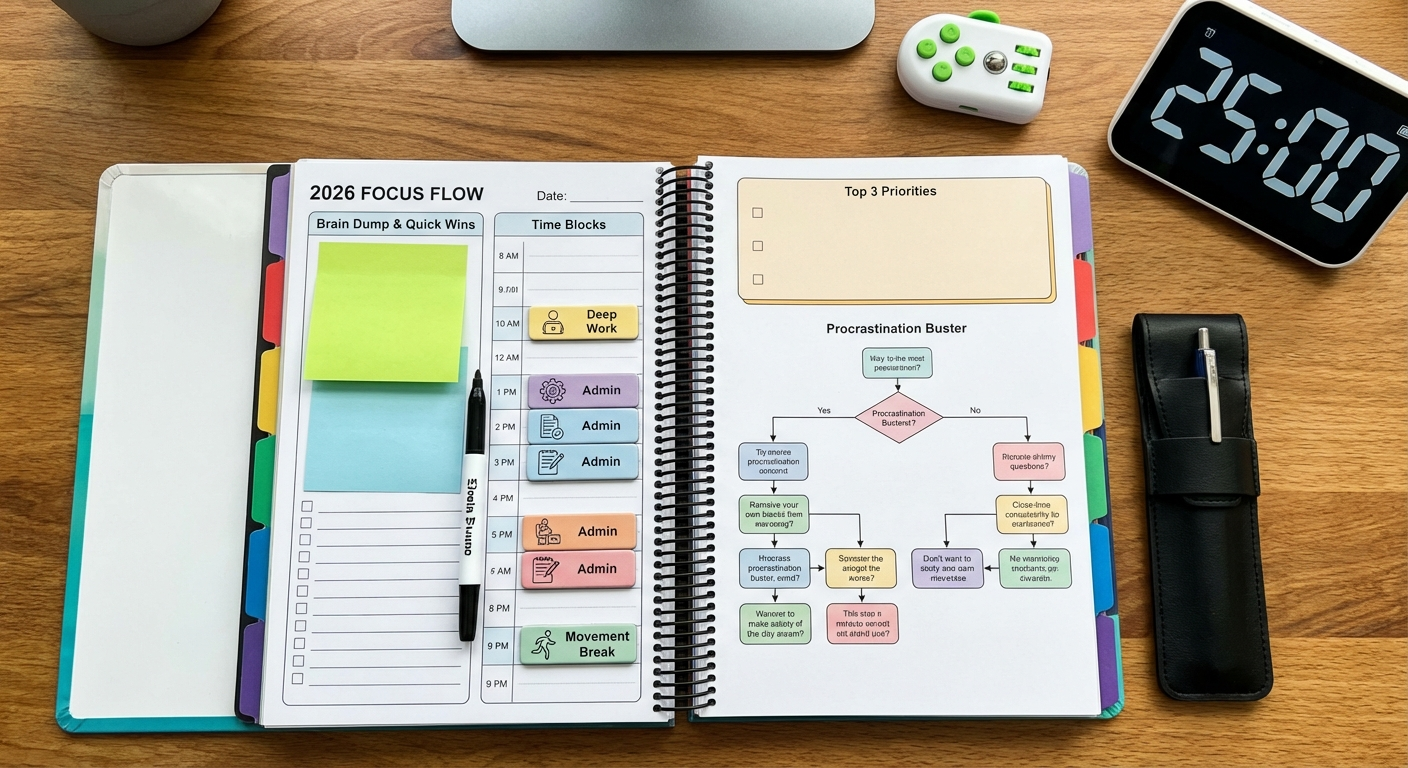
ADHD Planner System
Best for: External task structure and tracking
Why it works: Externalizes working memory
Check on Amazon →
Noise-Canceling Headphones
Best for: Reducing environmental distraction during tasks
Why it works: Reduces competing stimuli for attention
Check on Amazon →Strategy 3: The 2-Minute Rule (ADHD Adaptation)
David Allen's 2-minute rule ("if it takes less than 2 minutes, do it now") works unusually well for ADHD when applied during high-activation periods (stimulated, after exercise, first thing in morning).
ADHD adaptation: Pre-identify the smallest possible "starter action" for larger tasks during planning sessions. When it's time to start, the commitment is only to the 2-minute starter:
- Write the report → Open the document and type the title
- Clean the kitchen → Put away one item from the counter
- Start the presentation → Open the slide deck and add one slide title
- Pay bills → Open the first bill email
Once in motion, the ADHD brain usually continues — it's initiation that fails, not completion.
Strategy 4: Habit Tracking for External Accountability
Habit tracking is powerful for ADHD procrastination because it provides immediate visual reward (marking a habit complete) and externalizes the tracking function that working memory fails to provide. See our ADHD time management strategies guide for how to build habit systems that stick.
Effective ADHD habit tracking setup:
- Maximum 3-5 habits tracked daily (not 12 — overwhelm kills compliance)
- Digital trackers with push notifications outperform paper for most ADHD adults
- Visual streaks create a game element that engages interest-based motivation
- Weekly review catches habit drift before it becomes pattern
For the best habit apps, see our best apps for ADHD adults guide.
Strategy 5: Environment Design — Make It Easier to Start
The friction hypothesis: ADHD procrastination is worsened by any friction between intention and action. Removing friction lowers the activation energy required to start.
Friction reduction strategies:
- Leave tomorrow's task already set up before ending today's work session
- Pre-stage materials (open tabs, set out notebooks, cue up music)
- Use dedicated work environments (different space = different mental state)
- Block distracting websites using tools like Freedom or Cold Turkey during work periods
Adding friction to distractions:
- Log out of social media (re-logging in creates pause-for-thought moment)
- Put phone in another room during work sessions
- Turn off all notifications except phone calls
Strategy 6: Task Unmasking — Identify Hidden Barriers
Many ADHD procrastination tasks have a hidden barrier preventing initiation that has nothing to do with laziness. Common examples:
- Unclear next action: "Work on project X" is not actionable; "write opening paragraph of section 2" is
- Emotional avoidance: The task involves something uncomfortable (confrontation, judgment, failure risk)
- Missing prerequisite: Can't start because you're waiting for something else or don't have a needed piece of information
- Scope overwhelm: The task seems too large to start — needs to be broken into sub-tasks
When you notice consistent avoidance of a specific task, ask: "What is the actual barrier?" Often removing one specific obstacle unlocks the task.
Strategy 7: The OHIO Principle for Email and Admin Tasks
Only Handle It Once (OHIO) — when you open an email, message, or document, take action immediately:
- Respond within 2 minutes: do it now
- Requires more time: schedule a specific block in your calendar before closing
- Delegate: forward and create tracking note
- Defer: set a reminder with a specific re-open time
ADHD brains re-read emails dozens of times without acting because each re-read is a substitute for decision-making. OHIO forces the decision at first encounter.
What Doesn't Work for ADHD Procrastination
Understanding what fails prevents wasted effort and self-blame:
| Strategy | Why It Fails for ADHD |
|---|---|
| "Just try harder" | Requires the executive function that isn't working |
| Willpower-based commitment | ADHD depletes willpower faster; relies on broken self-regulation |
| To-do lists alone | Doesn't trigger initiation; externalizes memory but not activation |
| Morning motivation routines | Only works if execution follows — often doesn't |
| Punishing yourself for procrastinating | Increases shame → increases avoidance (opposite effect) |
| Waiting for "motivation" | Interest-based activation doesn't work on schedule |
For deeper ADHD productivity systems, see our best ADHD productivity systems guide.
ADHD Procrastination at Work vs Personal Tasks
ADHD procrastination patterns differ between contexts:
Work procrastination: Deadline pressure provides artificial urgency that eventually activates the ADHD brain. Many ADHD adults work best with hard external deadlines — the crisis activation is genuine, not a character flaw. The problem is the suffering until the deadline arrives, and the missed opportunities when deadlines are soft.
Personal task procrastination: Bills, medical appointments, personal admin, home maintenance — these have no deadlines, no urgency, and no external accountability. They accumulate in painful ways. ADHD adults frequently have excellent work performance alongside chaotic personal administration.
Solution asymmetry: The same strategies that work at work (external deadlines, accountability) need to be replicated artificially for personal tasks. An accountability partner for personal admin (not just professional tasks) can dramatically reduce personal task backlog.
Tools and Systems That Help
Digital Tools
- Focusmate: Virtual body doubling platform — schedule 50-min sessions with strangers; high accountability
- Forest App: Phone-away timer with gamification — grows a virtual tree while you focus
- Todoist: Task manager with natural language input — low friction for ADHD capture
- Freedom: Website and app blocker for removing distraction temptations
Physical Tools
- Time Timer: Visual countdown clock — most important single tool for ADHD urgency creation
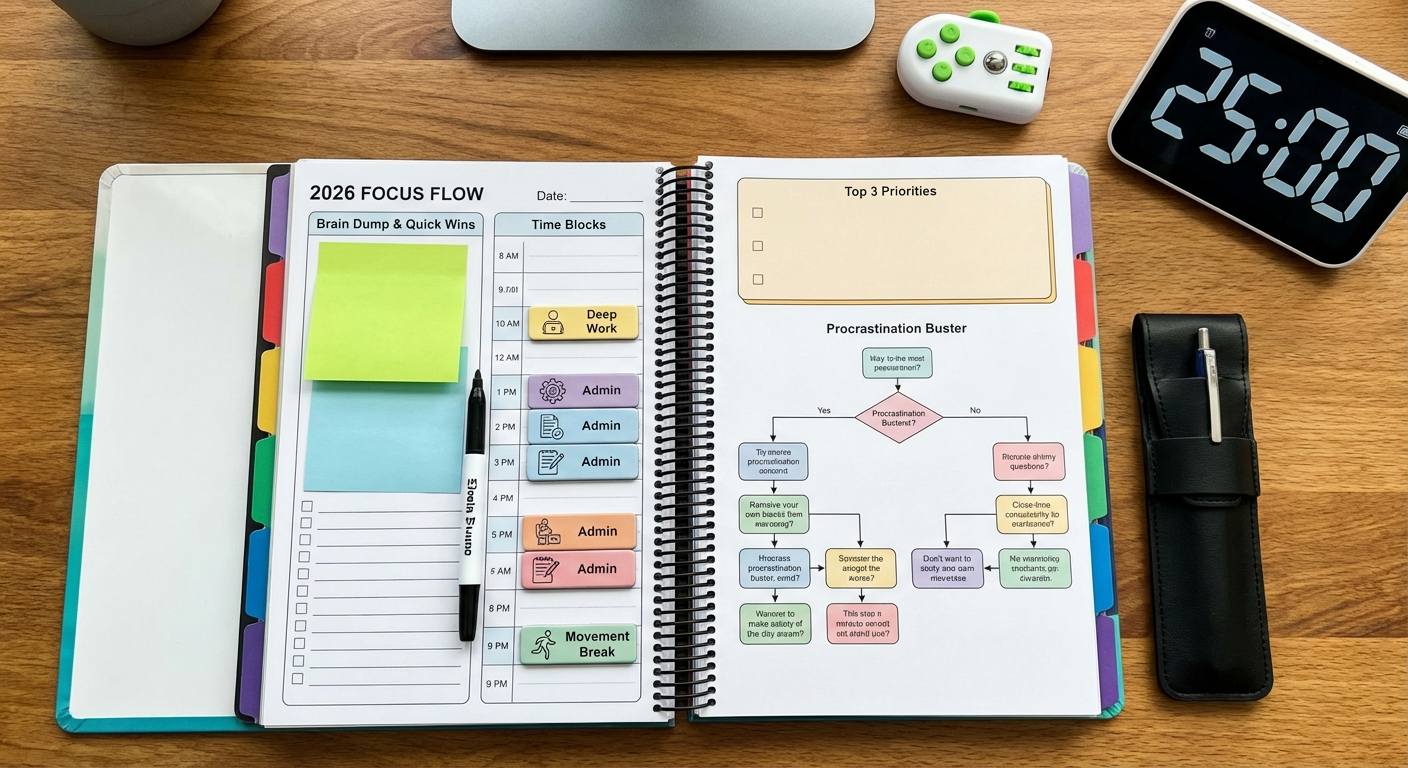
- ADHD planners: External structure for daily task management (see our best ADHD planners)
- Whiteboard: Visible task lists remove working memory demands
- Noise-canceling headphones: Reduce environmental distraction for focus sessions
Frequently Asked Questions
Why do people with ADHD procrastinate so much?
ADHD procrastination is rooted in executive function deficits. Impaired dopamine regulation makes it neurologically harder to initiate tasks without immediate reward, interest, urgency, or novelty. This is not volitional — it is a genuine brain difference.
Is ADHD procrastination the same as laziness?
No — neuroimaging research shows reduced dopamine activity in the ADHD prefrontal cortex that impairs task initiation even when motivation is present. People with ADHD often want to start tasks urgently but cannot. This is neurological, not character-based.
What helps ADHD procrastination most effectively?
Body doubling, artificial urgency creation (time timers, fake deadlines), environment design (removing friction), habit tracking, and the 2-minute rule adapted for ADHD. External structure compensates for impaired internal regulation.
Can medication help ADHD procrastination?
Yes — stimulant medications improve dopamine regulation and can significantly reduce task initiation difficulty. Medication is most effective when combined with behavioral strategies. Consult your prescribing physician.
Is body doubling effective for ADHD?
Yes — one of the most consistently recommended and effective strategies. Working alongside another person (even virtually) provides external regulation. Virtual platforms like Focusmate make this accessible remotely.
Sources and Methodology
Clinical References:
- Dodson WW: "Interest-based nervous system in ADHD." ADDitude Magazine 2016
- Barkley RA: "Executive Functions: What They Are, How They Work, and Why They Evolved." 2012
- Brown TE: "A New Understanding of ADHD in Children and Adults: Executive Function Impairments." 2013
- Solanto MV et al: "Efficacy of meta-cognitive therapy for adult ADHD." American Journal of Psychiatry 2010
- Shaw M et al: "ADHD prevalence and dopamine regulation." BMC Psychiatry 2012
Internal links referenced:
- ADHD Time Management Strategies
- Best ADHD Planners for Adults
- Best Apps for ADHD Adults 2026
- Best ADHD Productivity Systems 2026
For ADHD adults who benefit from structured support tools, consider a ADHD journal and planner combo for externalizing task management and a pomodoro timer for ADHD focus for structured work intervals.